.png)
Sales and brand training have been the backbone of the industry for decades. From curbside chats with your supervisor in an account parking lot, to a Friday GSM and its never-ending parade of suppliers, to the ‘this is how you enter data into the CRM’ coaching guides and videos sent out, it’s how we’ve been doing things for years.
We are in a new environment today, with continued declines in industry volumes, better-educated buyers in both on- and off-premise, and dozens of SKUs fighting for every available shelf and backbar. Yet in many ways, training and development topics haven’t changed.
Sure, today’s training technology is amazing, and AI can help bang anyone out a simple yet effective sales training presentation in minutes but faster doesn’t always mean better. I believe that we need to make a fundamental shift in our approach to training industry salespeople.
Understanding the Buyer's Side of the Equation
I’ve made a career out of educating thousands of supplier and distributor reps on the seller’s side of the equation. The seller’s side is all the things that make a brand unique: the founder’s history, artisanal production techniques, amazing packaging, celebrity backing – you’ve heard it all before and for some of you, it might have even come from me at the front of the room.
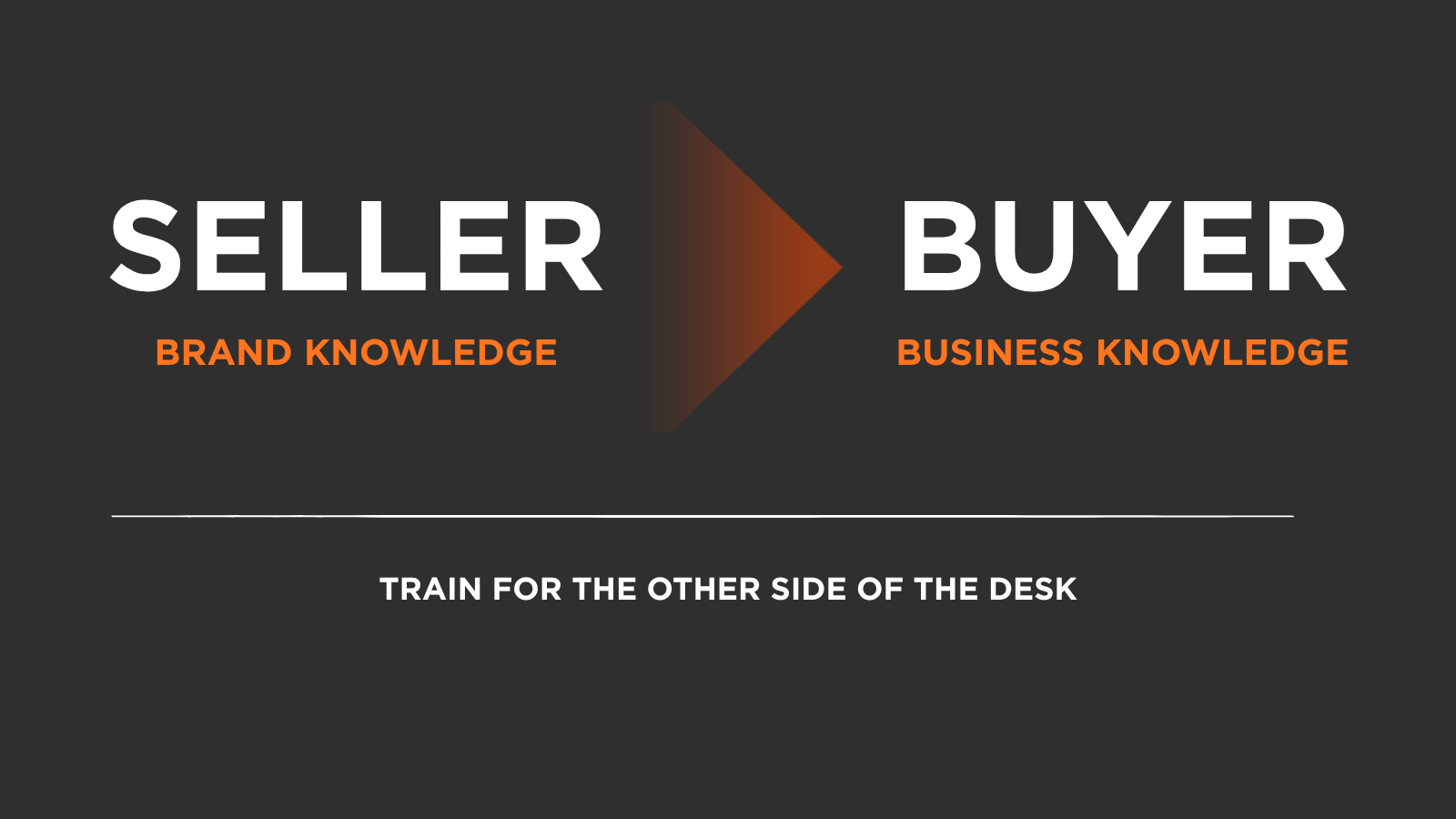
The opportunity is to shift into also educating salespeople on the buyer’s view of decision making because when we understand the buyer’s business and how it frames the decisions a buyer makes, the equation changes.
It comes down to this: understanding how your customer makes decisions changes how you sell them as buyers don’t buy brands for the same reasons salespeople sell them.
“Buyers don’t buy brands for the same reasons salespeople sell them.”
The On-Premise: Every Decision Has an Opportunity Cost
In the on-premise, the most valuable piece of real estate is the cocktail menu. Nielsen CGA research reports that about 3 in 5 cocktail drinkers look at the cocktail menu every time or almost every time before ordering, and 2 in 5 are likely to choose a signature cocktail when one is available. But to earn space on that menu means knowing what the buyer in that account values as important:
- Margin or velocity? A pour cost within the account’s target range is attractive, but not for a category or bottle that doesn’t move
- What comes off? There’s a risk that the brand that goes on won’t move or be as profitable as the cocktail coming off the list
- Is it relevant to their guests? “This is a great brand that I really need placements on” matters less than “Does this give the account’s guests something they actually want?”
In the on-premise there’s an opportunity cost to every decision the operator makes. A rep who understands that opportunity cost stops selling the value of their product in isolation and starts demonstrating why it's a better use of the account's limited resources.
The Off-Premise: Every Inch Has to Earn Its Place
And in the off-premise the boundaries that the operator is working within are even more constrained. Shelf space, display space and cooler space are finite. Even a retail buyer’s attention span is limited. Off-premise is every brand’s initial target because the sales cycle is usually shorter than the on-premise, and you can get results quicker. That doesn’t mean, however, that salespeople can afford to ignore what are driving decisions in this channel.
- Inventory-dollars limits? The salesperson thinks they’re only asking to bring in five cases, but the buyer is thinking they’re asking to take money that they could put into something that for sure will sell and make a bet on a new product.
- Shelf productivity? The salesperson sees a placement, but a smart buyer sees it as an allocation of a finite resource. Every inch of shelf space needs to earn its place. Adding your brand means the buyer is betting that it will generate more sales, profit, or strategic value from that space than the SKU it replaces—or than another product competing for the same space.
- Adding another SKU? Adding another flavor, package size or line extension may create incremental sales, or it may simply fragment sales that were already happening across their existing SKUs.
Training for the Other Side of the Desk
These examples highlight where the traditional training focus now falls short. The info that salespeople are receiving about brands – about your brand – is often delivered in a silo and rarely lays out the selling proposition in the buyer’s own strategic framework.
If sales training begins and ends with product knowledge, selling stories and objection handling, we're leaving an important capability undeveloped: teaching salespeople to see the decision from the other side of the desk.

Ready to move forward?
Let's talk about your growth. Strategy, execution, or partnership. We're here to listen.